Not sure what your trees need? Our certified arborists can help.
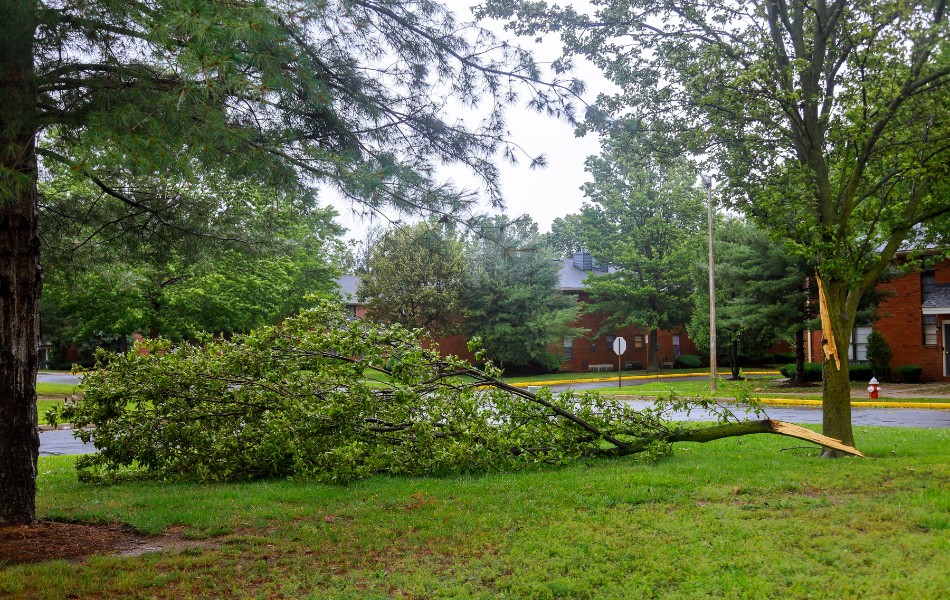
After Middle Tennessee’s storm activity this spring, Metro Nashville’s Urban Forest Strike Team identified “hangers” still lodged in tree canopies as a lingering safety concern. These broken or detached branches can remain overhead long after a storm has passed, particularly in neighborhoods with older, established trees like Hermitage and Donelson.
But storm damage isn’t the only reason a tree can become dangerous. Some problems develop gradually and become easier to see once the leaves fall off.
So how do you know if a tree is dangerous? Start with what you can see from the ground. Once leaf-drop exposes the trunk, major limbs, branch unions, and base, structural warning signs are easier to spot.
Key Takeaways
- Fall leaf drop makes cracks, damaged limbs, branch unions, and other structural concerns easier to see from the ground.
- A new or worsening lean, major cracks, fungal growth near the base, and large dead or hanging branches can indicate a potential tree hazard.
- Sudden changes and problems that could affect a home, driveway, walkway, or other frequently used area warrant more immediate attention.
- A potential hazard does not automatically mean a tree needs to be removed; some concerns can be managed through pruning, cabling, or bracing.
- A Certified Arborist can evaluate the entire tree to determine the level of risk and whether preservation or removal is appropriate.
When Is the Best Time to Check Your Trees for Hazards?
Fall is one of the best times to check your trees for potential hazards, especially after the leaves have dropped. A bare canopy gives you a clearer view of the trunk, major limbs, and branch unions, making cracks, broken or hanging branches, cavities, and other structural concerns easier to spot. It also gives you time to have questionable trees assessed and schedule any necessary pruning or removal before winter weather arrives. Once new growth fills the canopy in spring, some of these problems can be harder to see from the ground.
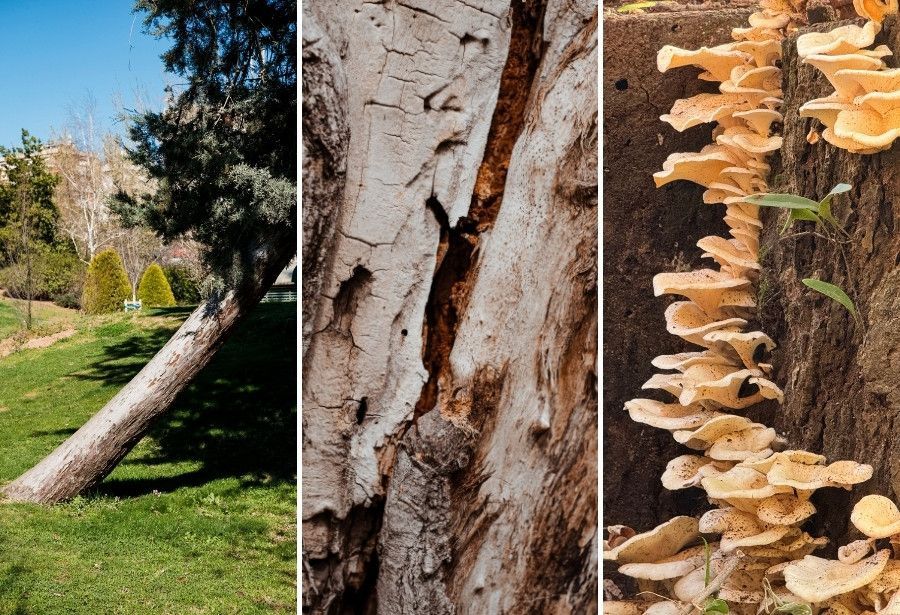
A new or worsening lean, trunk cracks, and fungal growth near the base are warning signs that a tree may need a closer professional evaluation.
What Are the Warning Signs of a Hazardous Tree?
Once you can see your tree’s full structure, you can do a simple ground-level self-check for a few common warning signs that help you spot potential safety concerns. You don’t need to find every one to know it’s time to call, but each one is worth a quick look.
A Lean That’s New or Getting Worse
A tree that has leaned slightly for years, in the same direction and at the same angle, is usually not an emergency. A lean that’s new, or one that’s visibly worse than it was last season, is a different story. Sudden leaning often points to root failure, which makes it one of the more urgent signs on this list and a priority for a professional look, especially if the soil around the base looks lifted or cracked.
Cracks in the Trunk or Major Limbs
Vertical or horizontal cracks in the trunk or in a major limb can indicate a structural weakness. Pay close attention to cracks where a large limb meets the trunk, since these unions carry significant stress. Some cracks may be manageable with cabling and bracing, while deeper, widening, or spreading cracks can point to a more serious structural problem. A professional evaluation can determine whether preservation is still an option or removal is the safer choice.
Mushrooms or Fungal Growth at the Base
Fungal growth at the base of the trunk or over the root zone may point to internal decay, even when the canopy above still looks healthy. This is a sign worth acting on quickly rather than waiting to see if it spreads. Visible fungus at the base can indicate the decay behind it is already advanced, since the fungus itself is only the visible sign of a much larger problem underground.
Bark Changes
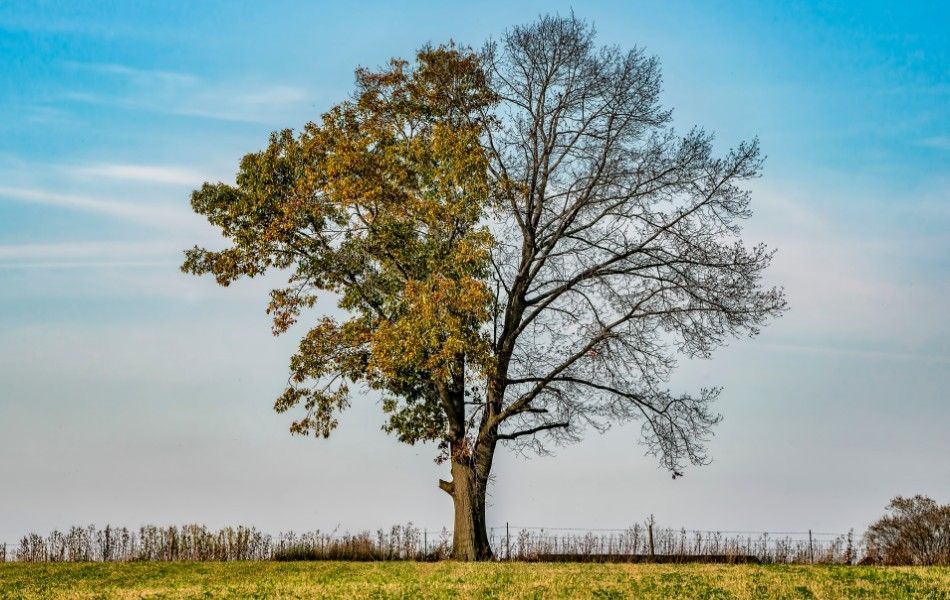
Peeling, cracked, or missing bark can indicate that part of a tree or branch is dead or declining, although bare branches during dormancy can make it harder to tell what’s still alive. If you’re unsure, lightly scratch a small area of bark on a twig with your fingernail or a pocketknife. Living tissue underneath should appear green and moist. If the tissue is brown and dry and the twig is brittle, that portion of the branch may be dead and should be examined more closely.
Old, Heavy Deadwood Overhead
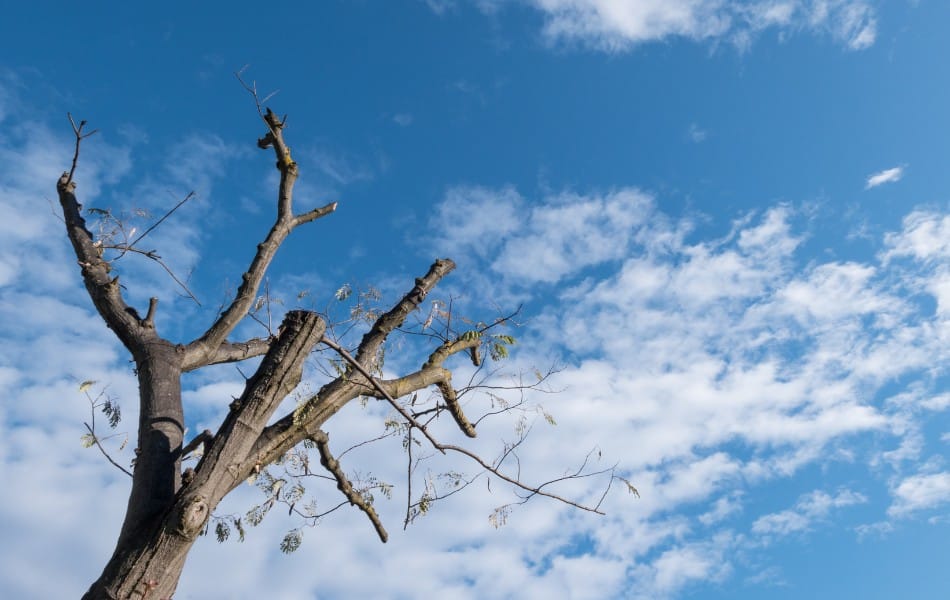
Deadwood over three to four inches in diameter is worth real concern, particularly when it’s hanging over a driveway, walkway, or roofline. Watch especially for a broken limb that’s still hung up in the canopy rather than on the ground, sometimes called a widow maker. It can come down with no warning, no wind, and no storm, which makes it dangerous even on a completely calm day.
What Should You Do If You Think Your Tree Is Dangerous?
If you notice a potential problem, think about whether it’s new or has changed over time. A condition that has looked the same for years may be something to continue monitoring, while a newly developed lean, fresh crack, hanging branch, or other sudden change warrants more immediate attention. Taking photos can help you track whether a concern is getting worse over time or changes after a significant storm.
It’s also worth having the tree evaluated sooner if you notice multiple warning signs or if the affected tree or branch could reach a home, driveway, walkway, or other frequently used area if it failed. Requesting a free estimate is a straightforward way to have the tree evaluated and determine whether any work is needed.
Does a Dangerous Tree Always Need to Be Removed?
No, a warning sign of a dangerous tree does not always mean removal. Some signs point toward removal, and others point toward preservation, most often through cabling and bracing.
Preservation is usually the right call for a slight, long-standing lean paired with a healthy root zone, or a vertical crack caught early before it spreads. Removal is more likely when a tree shows a sudden new lean, major root damage, a severe or spreading trunk crack, or advanced decay. A tree preservation option is worth asking about before assuming a tree has to come down.

How Do Arborists Determine If a Tree Is Hazardous?
A Certified Arborist looks beyond the warning sign that first caught your attention to evaluate the tree’s overall condition and the consequences if part or all of it were to fail. That includes examining the trunk, roots, branch attachments, canopy structure, signs of decay, and nearby homes, driveways, walkways, or other areas where people and property could be affected.
This broader assessment can uncover concerns that aren’t obvious during a ground-level check, such as weak branch unions higher in the canopy, changes around the root zone, or decay with limited external signs. It also helps determine whether the risk can be reduced through pruning or tree preservation techniques or whether removal should be considered.
If the concern involves recent storm damage, a hanging limb, or a sudden change that could pose an immediate threat, emergency tree service may be appropriate.
Frequently Asked Questions About Dangerous Trees
How can you tell if a tree is dangerous or just unhealthy?
An unhealthy tree may show signs such as discolored leaves, thinning foliage, or reduced growth without posing an immediate safety risk. A potentially dangerous tree has structural concerns that could lead to branch or tree failure, such as major cracks, broken or hanging limbs, significant root damage, or a sudden lean. Because poor health and structural problems can occur together, an arborist can determine whether the issue affects the tree’s stability.
Can a tree look fine from the ground but still be dangerous higher up?
Yes. Problems like cracked limbs or weak branch unions often sit higher in the canopy, where they’re hard to see without training or equipment. This is one of the main reasons a ground-level self-check is a good first step rather than the final word.
Does one dead branch mean the whole tree is dying?
Not necessarily. Trees can shed individual limbs due to localized damage, shading, or age while the rest of the tree stays healthy. This is why a full evaluation looks at the whole tree, not just the one visible problem.
Can a tree be a hazard even if it looks healthy?
Yes. Tree health and tree safety aren’t the same question. A tree can be biologically healthy, full canopy, active growth, no disease, and still carry a structural weakness such as a poor branch union or a lean severe enough to be a hazard. That’s why a hazard check looks at structure specifically, not just how green or full the canopy looks.
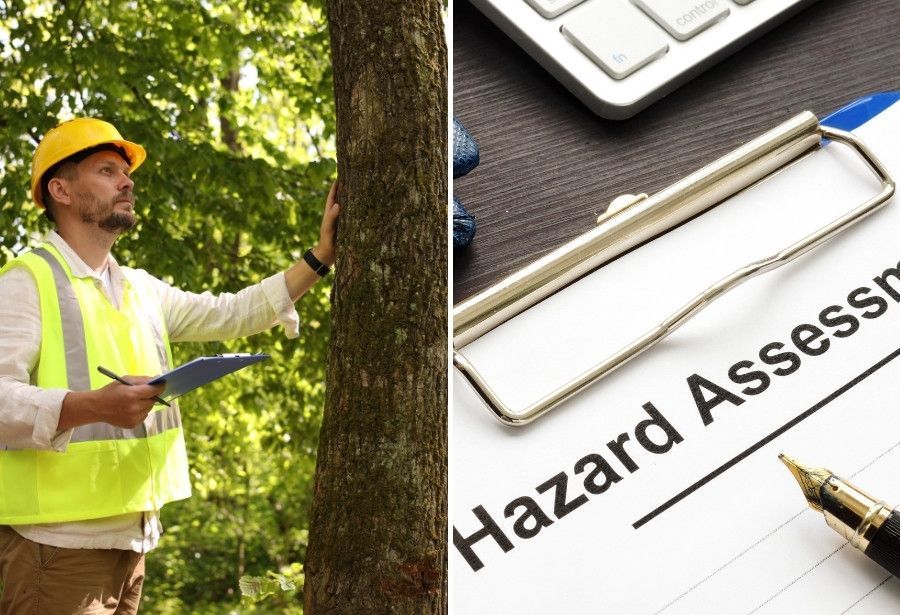
A professional tree risk assessment looks beyond visible warning signs to evaluate the tree’s structure, condition, and potential risk to nearby people or property.
Get Your Trees Checked Before Winter
If something about your tree looks different, unstable, or potentially hazardous, don’t rely on guesswork. A professional evaluation can tell you whether the tree is safe to monitor, can be preserved, or needs more immediate attention. This matters most for older, established trees, like those common in Hermitage and Donelson, where decades of growth mean more large limbs and more potential failure points to check.
If your check turned up a new lean, structural crack, hanging deadwood, decay, or anything you’re unsure about, request a free estimate. Tree Solutions can take a closer look and help you decide what to do next.
Brian Holloway
Brian Holloway is the founder and owner of Tree Solutions, a family-owned tree care company serving Middle Tennessee. With nearly 20 years of experience, he has overseen thousands of residential and commercial tree care projects and is dedicated to providing professional, dependable service.